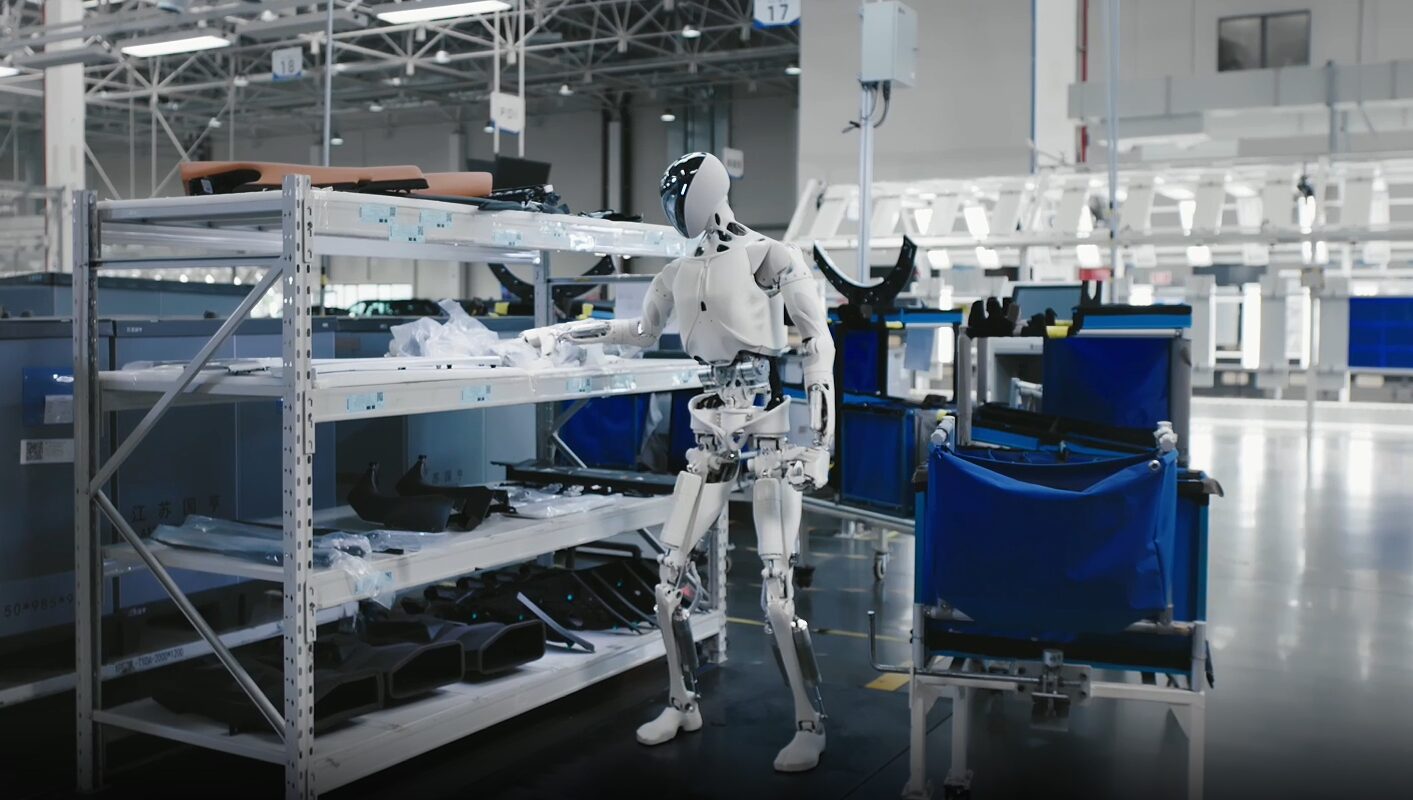
A few weeks ago I was walking XPeng’s production line in Guangzhou. Among the workers — human workers, doing the choreography that assembly lines have run for a century — a humanoid robot was doing a job.
I stopped walking. I was the only one who did.
Nobody filmed it. Nobody pointed. The workers around it didn’t look up. Somewhere in my feed that same week, a robot standing upright for ninety seconds was going viral. Here was one holding down a shift, and the most remarkable thing about the scene was that nobody there found it remarkable.
I’ve thought less about the robot since, and more about the shrug.
The shrug is the story
Where you live, a robot with a job is an op-ed. It’s a parliamentary hearing, a keynote slide, a labor-market projection with error bars. On that factory floor, it’s a colleague. Same event, two different information worlds.
Normalization is the most underrated technology indicator we have. Technologies become cheap, reliable, and boring before they become globally visible — the boredom is the tell. By the time something makes news in your feed, it’s often already infrastructure somewhere else. The gap between those two moments is where competitive surprises come from.
So here’s the first uncomfortable question, and it isn’t about China: what is your boardroom currently debating as “emerging” that is already boring on a factory floor in the Greater Bay Area?
Why nobody looked up: the robot came from the parts bin
The shrug has an explanation, and it’s industrial, not cultural.
XPeng’s robot — it’s called Iron — runs the same proprietary Turing AI chip as the company’s cars. Most of what a humanoid robot is made of — batteries, motors, cameras, compute — comes out of the same supply chain that builds electric vehicles. The workers on that line weren’t watching science fiction. They were watching the parts bin they work with every day, rearranged into a coworker.
That’s also why the program is moving at car-industry speed rather than research-lab speed. XPeng calls the current phase a “mass-production sprint”: mass production targeted for the end of 2026, a 110,000-square-metre “full-chain” robot factory breaking ground in Guangzhou, and the group CEO taking personal charge of the robotics division. This is not a skunkworks. It’s a product line.
Stand on that floor and the loop becomes visible: the line builds the robot, the robot works the line, the line builds the cars, the cars fund the robot factory. An industrial base compounding into its own successor — and the people inside it treating that as a Tuesday.
Which raises the second question: if a humanoid robot is just a mature supply chain wearing a body, how much of your industry’s moat is really a supply chain — one that sits on someone else’s continent?
The flying car got the same shrug
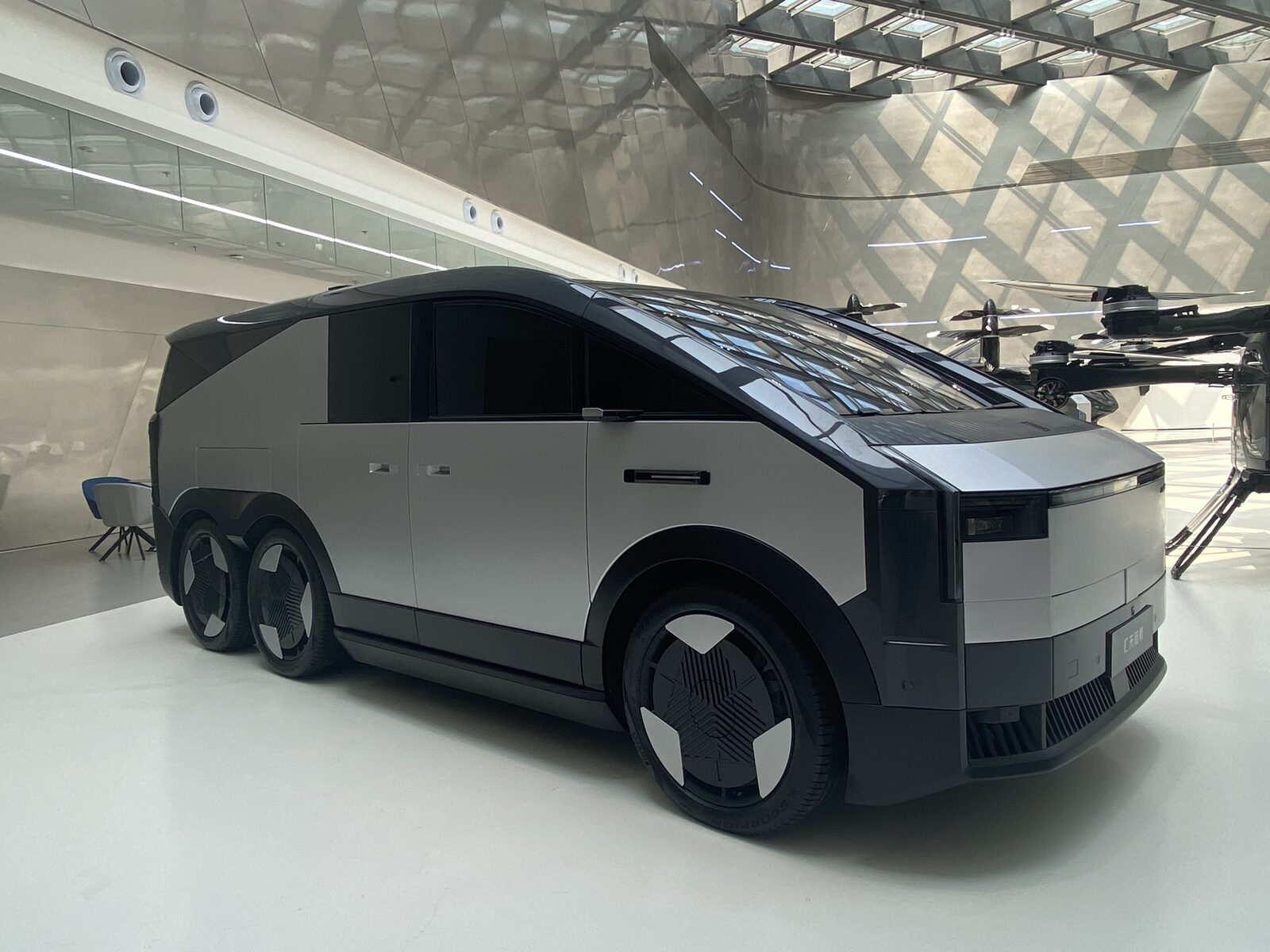
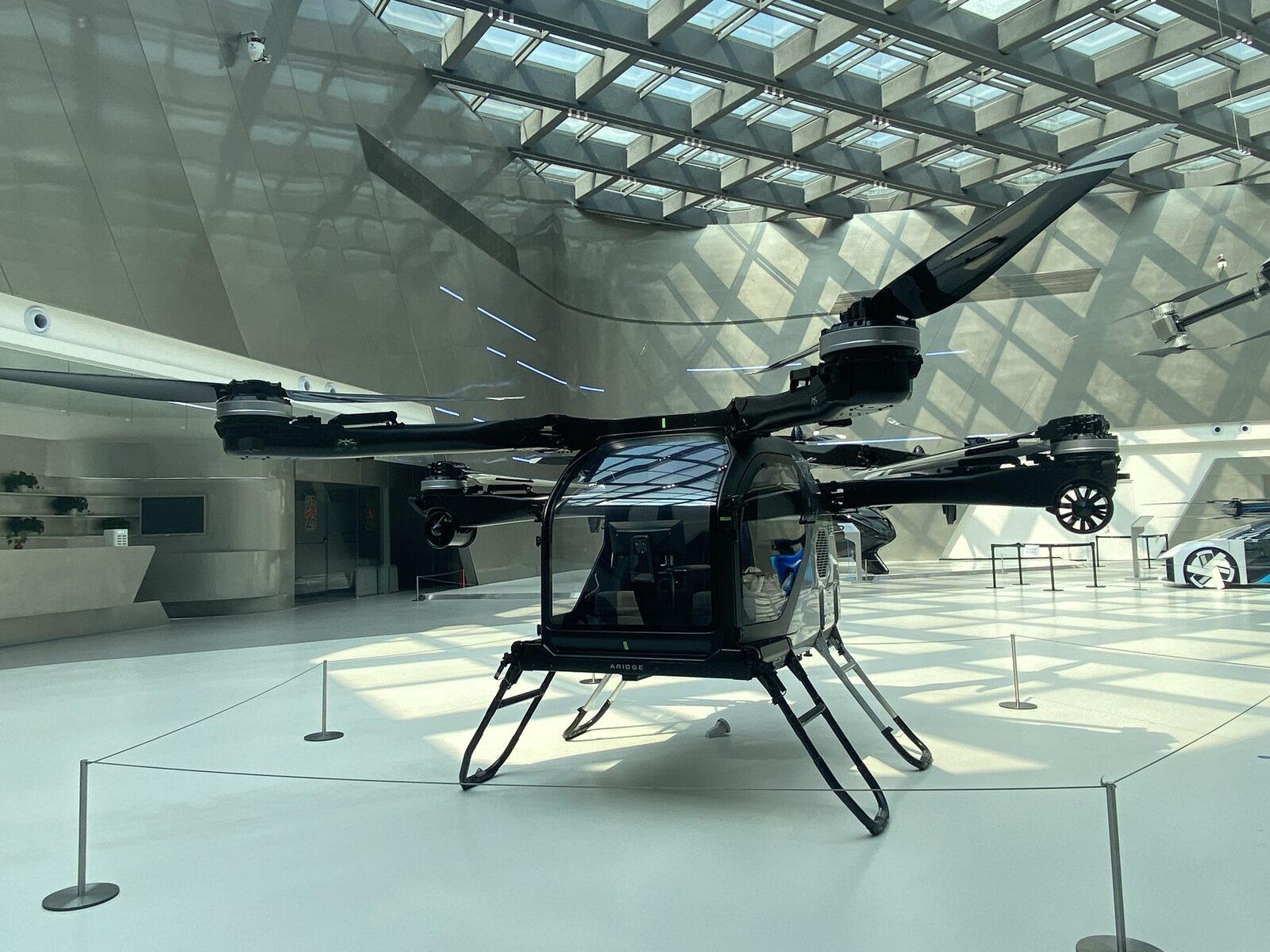
Outside sat the thing visitors cross oceans to see — I only had to drive two hours: XPeng Aridge’s “Land Aircraft Carrier.” A six-wheeled electric mothership with a two-seat eVTOL aircraft in the back — an aircraft that launches from the vehicle and recharges from the vehicle’s own 800-volt powertrain. A van that carries its own airplane. Nobody in the courtyard gawked at that either.
Because here, it isn’t a concept. It’s a product with a price. Under two million yuan — about $280,000 — and selling: public reporting had preorders passing 7,000 this spring, with 90-plus orders a day coming in at the Beijing Auto Show; by the time of my visit in June, a director there told me they had pre-sold more than 10,000. The first unit rolled off a dedicated Guangzhou assembly line in November 2025, in a 120,000-square-metre plant designed to produce one airframe every thirty minutes at full rate. Read that sentence again: an aircraft plant, specified in takt time, like a car factory — because it was built by people who build car factories.
While much of the world is still debating whether flying cars are feasible, the conversation I heard was about delivery schedules. Aviation is being rebuilt with automotive economics, the same way the low-altitude economy turned drone delivery into street furniture one city over.
Question three: which “someday” technology in your strategy deck already has a price tag and a waiting list — and would your organization know?
What the shrug hides
Now the honest part, because normalization cuts both ways. The shrug can recalibrate you; it can also anesthetize.
The Land Aircraft Carrier still needs its type certificate, airworthiness certificate, and operator certification before anyone pays to fly in one. A robot working the shift you happened to be shown is not the same as ten thousand robots deployed reliably across an industry. Mass-production targets are targets, and China has hype cycles just as San Francisco does — I’ve watched a few deflate up close.
The discipline is to read the shrug as a signal about direction and pace, not as a guarantee of every claim on the timeline. A factory visit shows you which way the river is flowing and how fast. Judging whether a specific boat arrives on schedule takes partners on the ground and repeat engagement — the part of the picture no tour, including ours, can hand you in a week.
The measurement
Here’s what actually unsettled me, standing on that line.
The robot wasn’t news there. It would have been unimaginable in most factories at home. The distance between those two reactions is a measurement — of how out-of-date the operating picture is in whatever room you normally sit in. And that number moves in one direction unless you deliberately reset it.
You can’t reset it by reading. I say this as someone who writes these pieces: the shrug cannot be televised. Secondhand, this story is a curiosity. Standing next to it, it rearranges your assumptions about labor, about supply chains, about what your own organization considers ambitious. That recalibration — same conclusion as last time, stronger evidence — only happens in person.
The robot finished its task. Nobody clapped. The line kept moving.
That silence is the most important thing I’ve heard all year.
Novula takes executives, founders, and government delegations onto factory floors like this one — including XPeng and its Greater Bay Area peers — on immersive innovation weeks. Explore the Tech & AI Innovation Tour, go deeper with the Supply Chain Tour, or get in touch.